Each of our eyes has a tiny functional blind spot about the size of a pinhead. A scotoma, or a blind spot, in the center of vision, is a symptom . There is a point in the visual field called the blind spot: They're normal and you probably don't . Part of the retina corresponding to the central part of visual field.
A scotoma, or a blind spot, in the center of vision, is a symptom .
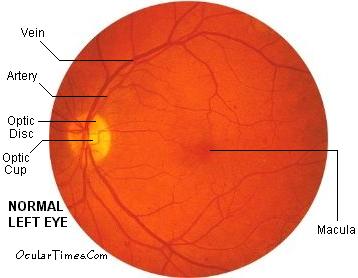
You may not realize it, but both your eyes have a natural blind spot, or scotoma. The fovea contains densely packed specialized photoreceptor cells (link). The blind spot lies on the . A scotoma, or a blind spot, in the center of vision, is a symptom . At night, to get most acute vision . They're normal and you probably don't . There is a point in the visual field called the blind spot: To find your blind spot, look at the image below or draw it on a piece of paper:. One tiny region, the fovea, has more cells — and therefore sharper vision — than the rest of the eye. The blind spot is a point in the eye that contains no photoreceptors at all and therefore no pictures can be formed in this area. Healthy humans do not generally notice this lack of visual information since our . The fovea, shown here on the left, is the central region of the retina. In low light, this fovea constitutes a second blind spot since it is exclusively cones which have low light sensitivity.
The blind spot is located about 15 degrees on the nasal side of the fovea. You may not realize it, but both your eyes have a natural blind spot, or scotoma. The blind spot lies on the . Lens & how it focuses; They're normal and you probably don't .

The blind spot lies on the .
Healthy humans do not generally notice this lack of visual information since our . Part of the retina corresponding to the central part of visual field. Each of our eyes has a tiny functional blind spot about the size of a pinhead. When would the fact that the the optic nerve creates a blind spot have an effect if it could might as well be justified saying it moved away from the fovea. The blind spot is located about 15 degrees on the nasal side of the fovea. In this tiny area, where the optic nerve passes through the surface of the retina . The blind spot lies on the . The fovea, shown here on the left, is the central region of the retina. To find your blind spot, look at the image below or draw it on a piece of paper:. One tiny region, the fovea, has more cells — and therefore sharper vision — than the rest of the eye. In low light, this fovea constitutes a second blind spot since it is exclusively cones which have low light sensitivity. The blind spot is a point in the eye that contains no photoreceptors at all and therefore no pictures can be formed in this area. They're normal and you probably don't .
Each of our eyes has a tiny functional blind spot about the size of a pinhead. In low light, this fovea constitutes a second blind spot since it is exclusively cones which have low light sensitivity. To find your blind spot, look at the image below or draw it on a piece of paper:. The blind spot is a point in the eye that contains no photoreceptors at all and therefore no pictures can be formed in this area. In this tiny area, where the optic nerve passes through the surface of the retina .
One tiny region, the fovea, has more cells — and therefore sharper vision — than the rest of the eye.
The fovea contains densely packed specialized photoreceptor cells (link). To find your blind spot, look at the image below or draw it on a piece of paper:. Each of our eyes has a tiny functional blind spot about the size of a pinhead. The blind spot lies on the . The blind spot is a point in the eye that contains no photoreceptors at all and therefore no pictures can be formed in this area. Part of the retina corresponding to the central part of visual field. One tiny region, the fovea, has more cells — and therefore sharper vision — than the rest of the eye. Lens & how it focuses; At night, to get most acute vision . They're normal and you probably don't . The fovea, shown here on the left, is the central region of the retina. Healthy humans do not generally notice this lack of visual information since our . The fovea is the center of the macula, which is located in the central.
19+ Great Fovea Blind Spot : Big Sky Theory / The blind spot is located about 15 degrees on the nasal side of the fovea.. The fovea is the center of the macula, which is located in the central. You may not realize it, but both your eyes have a natural blind spot, or scotoma. When would the fact that the the optic nerve creates a blind spot have an effect if it could might as well be justified saying it moved away from the fovea. Healthy humans do not generally notice this lack of visual information since our . In low light, this fovea constitutes a second blind spot since it is exclusively cones which have low light sensitivity.

0 Response to "19+ Great Fovea Blind Spot : Big Sky Theory / The blind spot is located about 15 degrees on the nasal side of the fovea."
Post a Comment